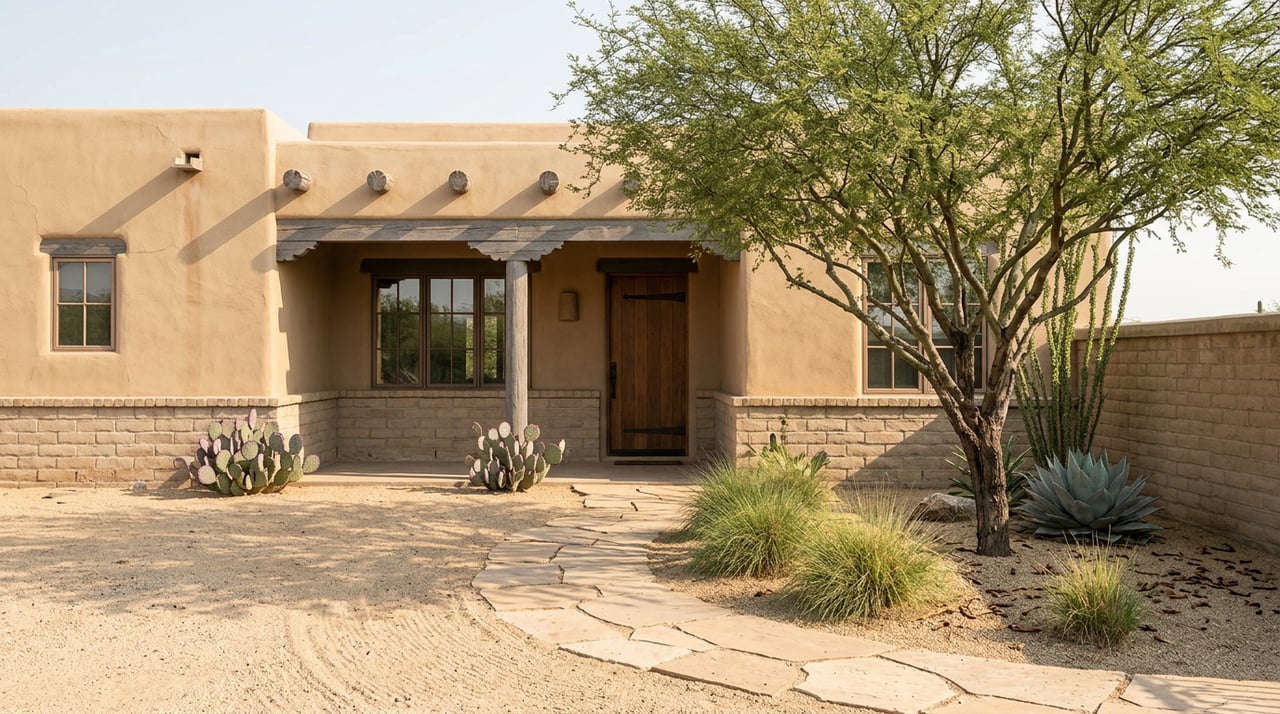
Picture two listings that hit the market in Carefree on the same Friday. Both are priced around $1.4 million. Both have mountain views of Black Mountain, a covered patio, and a three-car garage. One sits inside a gated community with a golf course view. The other is a half-mile walk from the Sundial Circle, in a mid-century home that's been updated over the years but never fully rebuilt.
A buyer touring both on the same Saturday would be forgiven for thinking they're choosing between two versions of the same product. They are not. One of these homes ties its closing timeline to a state-mandated inspection with a six-month expiration date. The other doesn't. The difference has nothing to do with square footage or finishes. It comes down to what's underneath the property and where the water comes from.
Two Systems, One Zip Code
Carefree's utility map is not uniform, and that surprises people who assume a town this polished runs on one grid. Many of the homes in the original townsite core sit on municipal water but rely on private septic systems for wastewater. The fully gated club communities, including The Boulders, Mirabel Club, and Whisper Rock, were built out on complete city utilities from the start.
That split means the paperwork on a Carefree sale depends heavily on which side of town the property sits. A listing in a gated golf community moves through closing the way a buyer expects: municipal water, municipal sewer, no additional state inspection triggered by the sale. A listing in the townsite core, especially one of the original 1960s or 1970s homes on a 0.3 to 1 acre lot, carries an extra procedural step that has to happen before the keys change hands.
The Inspection With a Six-Month Shelf Life
Arizona has run a statewide septic inspection program since the rule was extended to cover every on-site wastewater system in the state in 2006. Any time a septic-served property changes ownership, the seller has to retain a qualified inspector, someone holding an Arizona engineering or sanitarian license, a licensed septic pumper, or a contractor in one of several state-recognized categories, and have that inspection completed within six months of the closing date.
The inspector fills out a Report of Inspection and hands it to the seller, who then has to pass it along to the buyer before the transfer closes. State rule holds that this six-month requirement overrides any conflicting language written into the purchase contract itself. You cannot negotiate your way around the clock.
Here's where it becomes a genuine planning problem rather than a formality. Carefree homes are currently taking longer to sell than they were a year ago. In the three months ending May 2026, the median Carefree sale price sat at $1.3 million, but the average time on market had stretched to 83 days, up from 55 days over the same window the year before. Order your septic inspection the week you sign a listing agreement, and a home that takes five or six months to find a buyer can outlive its own inspection before it ever reaches the closing table. That means paying for a second inspection, on a system that likely hasn't changed at all, simply because the paperwork expired while the house sat on the market.
There's a second wrinkle specific to Carefree's older housing stock. Cesspools are prohibited outright under state code, and if an inspector finds one on a townsite property being sold, the inspection no longer qualifies under the transfer program at all. That's an edge case, but it's exactly the kind of surprise that shows up on a 1960s lot that hasn't had a full utility overhaul.
| Step | Typical Cost | Who Pays |
|---|---|---|
| Septic transfer inspection | $250 to $500 | Seller, by state rule |
| Failing system replacement | $15,000 to $30,000 | Negotiated in contract |
| Buyer's Notice of Transfer filing | Filed after closing | Buyer |
The Second Envelope, If Your Water Comes From a Well
Septic is only half the story for some Carefree properties. If the home draws water from a private well rather than a municipal line, Arizona Realtors require two separate signed forms before closing: the Domestic Water Well Addendum, which simply discloses that the property runs on well water, and a more detailed Water Use Disclosure Statement that covers what the seller actually knows about the well's history, output, and maintenance.
What makes this different from a septic inspection is that there's no equivalent state performance standard for private wells. Nobody is required to test water pressure, well depth, or annual yield before a sale closes. The due diligence sits entirely with the buyer and seller to work out between themselves. If the well is shared with a neighboring property, the seller should also be able to produce a written shared well agreement, since a well servicing two or more homes carries its own maintenance obligations that don't disappear at closing.
For a seller in the townsite core, gathering this paperwork early, before a buyer's inspection period starts the clock ticking, is the difference between a smooth escrow and a week spent tracking down maintenance records nobody thought to keep.
What the Utility Split Does to Price
Zoom out one town line and the same pattern shows up in price. Recent per-square-foot comparisons put Carefree's median $50 to $100 higher per square foot than neighboring Cave Creek, a gap that reflects more than the Sundial and a more polished downtown core. A larger share of Cave Creek's inventory sits on well and septic, while Carefree's gated club communities pull the town's average toward full-utility pricing.
The same logic should carry inside Carefree's own borders. A buyer comparing a similarly sized home in Whisper Rock or The Boulders against one in the townsite core isn't just weighing finishes and lot size. They're weighing whether they want to buy into a septic inspection clock and a well disclosure packet, or skip both entirely.
What This Means If You Are Listing This Fall
The slower market cuts both ways here. Buyer pools in Carefree skew toward buyers who own their homes outright and aren't especially sensitive to financing timelines, which means the extra weeks a septic-served home spends on market are less likely to scare off a serious buyer than they would in a more rate-driven submarket. But that same patience means sellers need to manage the inspection calendar themselves rather than assuming a quick sale will keep the paperwork current.
The practical move for anyone listing a septic or well-served Carefree home this fall is to schedule the transfer inspection close to when an offer is realistically expected, not the day the listing agreement is signed, and to have the well disclosure paperwork and any shared well agreement ready before the first showing. Neither step changes what the house is worth. Both change how smoothly it gets there.
Frequently Asked Questions
How long is a Carefree septic inspection valid before it expires? Six months from the date of inspection to the date of property transfer. If the home hasn't closed within that window, a new inspection is required.
Who pays for the septic transfer inspection? State rule places the responsibility on the seller, who must retain the qualified inspector, though the cost can still be addressed in contract negotiations.
Does every Carefree home need this paperwork? No. Homes on full municipal water and sewer, including most properties in The Boulders, Mirabel Club, and Whisper Rock, are not subject to the septic transfer inspection. It applies specifically to properties served by a conventional or alternative septic system.
What if the well is shared with a neighboring property? Ask for the existing shared well agreement before writing an offer. It should spell out maintenance responsibilities and any restrictions, such as limits on pool use, tied to shared water access.
A home's utility setup shouldn't be the thing that catches you off guard three weeks before closing. If you're weighing whether to list a well-and-septic property in Carefree's townsite core or want a clear read on how it stacks up against the gated club communities nearby, the team at NEW HAUS Real Estate Team can walk the timeline with you before you ever put a sign in the yard. Request Your Complimentary Home Valuation and let's map out exactly what your clock looks like.