Could your Scottsdale home help pay your mortgage? Many local owners are doing exactly that by renting a room, finishing a guest suite, or living in one unit of a small multifamily while leasing the others. If you want to offset housing costs without sacrificing lifestyle, house hacking can be a smart, flexible path. In this guide, you’ll learn the proven models that work in Scottsdale, the rules to check first, financing options, and a simple plan to get started. Let’s dive in.
What house hacking means
House hacking means using part or all of your primary residence to generate rental income or reduce expenses. In Scottsdale, you’ll see it most with roommates, attached suites, detached casitas, and 2–4 unit properties. Each option has a different balance of cost, privacy, and complexity. The right fit depends on your lot, zoning, HOA, financing, and comfort with management.
Best models in Scottsdale
Renting rooms to roommates
Leasing one or more bedrooms in a single-family home is the simplest entry point. It requires minimal upfront cost and can be set up quickly. You share common areas and set clear house rules from the start.
Pros:
- Lowest capital outlay and fast path to income.
- Flexible terms and easy to adjust if your plans change.
Cons:
- More day-to-day coordination in shared spaces.
- Higher turnover is possible.
- HOA rules and local occupancy limits may apply.
Attached guest suite
An attached guest or in-law suite adds privacy while staying within your main structure. It works well when you have a separate bedroom and bath that can be closed off.
Pros:
- More private than a standard bedroom rental.
- Often easier to add than a detached unit.
Cons:
- Conversions with a kitchenette or new plumbing typically need permits.
- May affect privacy and future marketability depending on layout.
Detached casita or ADU
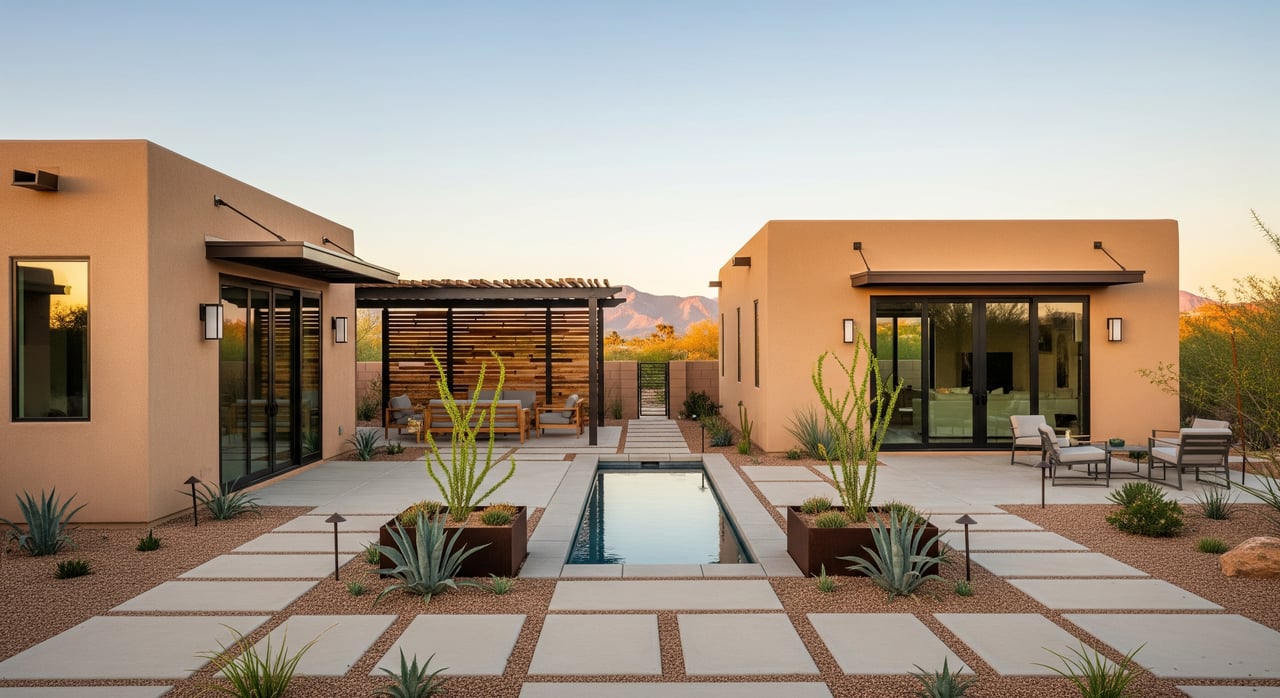
Detached casitas are common in Scottsdale’s architecture and can command strong rents. A separate entrance and outdoor space often improve tenant appeal and your privacy.
Pros:
- Strong privacy for you and the tenant.
- Higher rent potential for long-term or seasonal stays.
Cons:
- Higher construction and permitting costs.
- Utility connections and drainage must be designed and approved.
- Property taxes may rise after reassessment.
Small multifamily: duplex to fourplex
Buying a 2–4 unit property and living in one unit is a classic strategy. These properties are built for rental use, which can simplify management.
Pros:
- Owner-occupied financing is available for 1–4 unit properties.
- Established layouts designed for separate living and renting.
Cons:
- Higher purchase prices and competition in certain areas.
- More landlord responsibilities.
Scottsdale rules to check first
House hacking touches several layers of rules. Before you lease a space or start a project, verify the following.
City zoning and permits
Zoning determines if an accessory dwelling or separate suite is allowed on your lot, as well as size, placement, height, and parking. Structural changes, new plumbing or electrical, and the addition of a kitchen typically require permits and inspections through Scottsdale Planning and Development Services. If you plan separate utility service or submetering, check local policies before you design the project.
Short-term rental framework
Scottsdale regulates short-term rentals with registration, occupancy, operating, and nuisance rules. Requirements can change over time. If your plan includes seasonal or vacation guests, confirm current city rules and transient tax obligations before you list.
Maricopa County and state items
- Property tax and assessment: New structures or additions can increase assessed value. Check with the Maricopa County Assessor on likely impacts and timing.
- Health and environmental: If you are on septic or making changes that affect wastewater or drainage, county or city sign-off may be required.
- Landlord-tenant law: Arizona’s Residential Landlord and Tenant Act governs deposits, habitability, disclosures, and eviction procedures. Use compliant leases and consistent screening.
HOA and CC&Rs
Many Scottsdale communities have HOA rules and CC&Rs that control rentals, exterior changes, and ADUs. Some prohibit short-term rentals or require architectural review. Always confirm HOA requirements, registration steps, and timelines before you build or rent.
Financing options that work
Your financing strategy can make or break a house hack. The good news is several owner-occupied paths are designed for 1–4 unit properties and renovations.
Owner-occupied 1–4 unit loans
Conventional loans allow you to purchase a duplex, triplex, or fourplex as a primary residence. Lenders may consider rental income from the other units under specific rules. Rates and terms are usually more favorable than non-owner investment loans.
Key takeaway: Living in one unit can unlock better pricing and qualification paths.
FHA and VA options
FHA financing allows eligible buyers to purchase 1–4 unit properties as a primary residence with a low minimum down payment in many cases. FHA also has property condition and appraisal standards to clear. Eligible veterans can use VA loans for 1–4 unit purchases when they will occupy one unit. VA has its own occupancy and appraisal rules.
Renovation and construction loans
If you are adding a casita or converting space, renovation products can bundle purchase and rehab into one loan. FHA 203(k) and Fannie Mae HomeStyle are common examples, each with property and borrower eligibility requirements. For ground-up detached ADUs, construction or construction-to-permanent financing is typical. Existing owners sometimes use a HELOC or home equity loan to fund smaller projects.
Counting rental income
Underwriting may count projected market rents or require documented history, depending on the program. Short-term rental income is often treated conservatively or may require several months of proven income. Ask lenders to model both conservative and expected scenarios so you understand your margins.
Practical lender steps
- Get pre-approved for both owner-occupied and investment scenarios if you are shopping.
- Ask how much rental income can be used to qualify and what documentation is required.
- Clarify how renovations or ADU construction will be financed and when draws are released.
- Confirm reserve requirements, closing costs, and any program-specific rules.
Operating and risk basics
Owning a rental inside your residence changes how you manage, insure, and document the property. Set the right systems from day one.
Leases and screening
Use written leases or roommate agreements that outline payments, shared responsibilities, utilities, and house rules. Apply consistent screening criteria that comply with fair housing laws. Decide if you will offer short-term, mid-term, or long-term stays and tailor your documentation accordingly.
Insurance and liability
Standard homeowner policies may not fully cover rental use or multiple unrelated tenants. Ask your insurance agent about landlord or dwelling-fire coverage with appropriate liability limits. If you plan short-term rentals, consider STR-specific endorsements. Some owners add umbrella liability insurance for extra protection.
Taxes and bookkeeping
Rental income is taxable, but many related expenses are deductible. Track income, expenses, and depreciation carefully. If you add a new unit, your property’s tax basis and depreciation can change. A CPA can help you set up clean books and understand transient tax reporting if you host short-term guests.
Code, safety, and maintenance
Additional units must meet local codes for egress, smoke and carbon monoxide detectors, plumbing, and electrical. Budget for turnover, repairs, and capital improvements. Build a schedule for routine maintenance and a cash buffer for vacancies so your cash flow remains stable.
Parking and neighborhood fit
Scottsdale zoning may require off-street parking for added bedrooms or units. Plan for trash, quiet hours, and guest communications to avoid nuisance complaints, especially with short-term rentals.
Scottsdale-ready checklist
- Step 1: Verify property constraints
- Confirm zoning, setbacks, parking, and use permissions with the City of Scottsdale.
- Review HOA CC&Rs and architectural review requirements if applicable.
- Ask the Maricopa County Assessor about assessment changes for additions.
- Step 2: Run financing scenarios
- Explore owner-occupied 1–4 unit loans, FHA or VA if eligible, renovation loans, or construction-to-perm.
- Obtain pre-approvals for multiple scenarios to compare payment and cash flow.
- Step 3: Estimate costs and income
- Get contractor bids for conversions or casita builds.
- Pull rental comps from multiple sources and speak with local property managers for context.
- Step 4: Permits, insurance, and leases
- Apply for permits and plan inspections for structural, plumbing, and electrical work.
- Update your insurance to reflect rental use and consider liability coverage.
- Prepare compliant leases and house rules. Consult a local attorney if needed.
- Step 5: Operations
- Set screening standards, a maintenance plan, and a bookkeeping system.
- If hosting short-term guests, complete required city registration and plan for transient tax remittance.
Real-world scenarios
- Duplex owner-occupant: You purchase a Scottsdale duplex, live in one unit, and rent the other. You use an owner-occupied 2–4 unit loan, count market rent in qualification, and manage two separate leases.
- Garage conversion to casita: You convert unused garage space into a private suite. You pull permits, obtain HOA approval, update insurance, and prepare a long-term lease for a tenant.
- Seasonal rental casita: You build a detached casita to host seasonal visitors. You follow Scottsdale’s short-term rental rules, remit transient taxes, and set strict house policies for noise and parking.
Neighborhood fit and demand
Detached casitas and guest suites are common features in many Scottsdale homes and often appeal to long-term tenants and seasonal visitors. Demand can vary by neighborhood, lot size, and the frequency of HOAs. Areas near Old Town, McCormick Ranch, and North Scottsdale have different housing types and design languages, so the feasibility of an ADU or the availability of small multifamily can differ block to block. Always confirm local zoning and any private restrictions before you buy or build.
For sellers: house hacking as a value story
If you plan to sell, a well-permitted attached suite or detached casita can broaden your buyer pool. Many buyers like the option to host family or generate income, especially when spaces feel intentional and code-compliant. Clear documentation, thoughtful design, and polished presentation help buyers see the value without confusion about permits or use.
With in-house staging and design support, you can position flexible spaces for both lifestyle and income potential. That balance often creates a stronger first impression and a smoother sale experience.
Your next step
If house hacking is on your mind, start with your goals, budget, and comfort level with management. Then confirm the rules for your property, size up financing options, and map a clean operating plan. When you are ready to explore properties or position your current home for maximum appeal, we are here to help you move forward with confidence.
Ready to talk through your plan in Scottsdale? Connect with the NEWHAUS Real Estate Team for tailored guidance and next steps.
FAQs
Are ADUs allowed in Scottsdale single-family zones?
- It depends on your lot’s zoning and any HOA or CC&R restrictions. Confirm size, setback, height, parking, and use rules with the City of Scottsdale and review HOA requirements before you design or build.
What permits do I need to convert space to a suite?
- Structural changes and new plumbing or electrical typically require building permits and inspections. If you add a kitchenette, expect additional review. Always verify with Scottsdale Planning and Development Services.
Can I buy a duplex in Scottsdale with a low down payment?
- Owner-occupied financing is available for 2–4 units. FHA can offer low minimum down payments for eligible borrowers, and VA provides options for eligible veterans. Ask lenders to model your specific scenario.
Will adding a casita raise my Maricopa County property taxes?
- Additions and new structures can increase assessed value, which may raise taxes. Contact the Maricopa County Assessor for guidance on reassessment triggers and timing.
Can I use short-term rental income to qualify for a loan?
- Lenders may be conservative with projected STR income and often prefer documented history. Some programs disallow using projected STR income altogether. Confirm policy details with your lender.
What should I know about Scottsdale short-term rental rules?
- Scottsdale requires registration and has operating and nuisance standards, plus transient tax obligations. Check the city’s current requirements before listing and keep documentation up to date.